Welcome to the world of big data platforms! In today’s digital age, businesses of all sizes are generating vast amounts of data on a daily basis. These data sets can be incredibly valuable for companies looking to gain insights and make data-driven decisions. However, managing, processing, and analyzing this data can be a daunting task without the right tools and infrastructure in place.
That’s where big data platforms come in. These powerful solutions offer businesses the ability to store, process, and analyze large volumes of data in real-time, unlocking valuable insights into their customers, operations, and market trends. By leveraging the capabilities of big data platforms, businesses can gain a competitive edge and achieve greater efficiency, productivity, and profitability.
What are Big Data Platforms?
In today’s digital landscape, businesses are generating and collecting vast amounts of data from various sources, including customer data, transactional data, social media data, and more. This data can be used to gain valuable insights and make data-driven decisions, leading to increased efficiency, productivity, and profitability.
Big data platforms are advanced software systems designed to store, process, and analyze large volumes of data from diverse sources in real-time. Unlike traditional data storage and management systems, big data platforms can handle both structured and unstructured data from a wide variety of sources, including social media, mobile devices, sensors, and more. Additionally, big data platforms offer advanced analytics capabilities, including predictive analytics, machine learning, and data visualization.
Some of the core features of big data platforms include:
| Feature | Description |
|---|---|
| Scalability | Big data platforms can handle large volumes of data, making them ideal for businesses that need to store and process massive amounts of data. |
| Real-time data processing | Big data platforms can process data in real-time, allowing businesses to make decisions based on up-to-the-minute information. |
| Advanced analytics capabilities | Big data platforms offer a wide range of advanced analytics tools, including machine learning, predictive analytics, and data visualization. |
With these features, big data platforms can help businesses gain valuable insights into customer behavior, market trends, and more. This, in turn, can help businesses make better decisions, improve their customer experience, and increase their overall competitiveness.
Why Your Business Needs a Big Data Platform?
Businesses today generate vast amounts of data from various sources such as customer interactions, sales transactions, and social media activity. Managing and analyzing this data can be a challenging task, especially for companies that lack the necessary tools and expertise. This is where big data platforms come into play.
Investing in a big data platform can help businesses gain valuable insights into their operations, customers, and markets. By leveraging the advanced analytics capabilities and real-time processing features of these platforms, companies can make data-driven decisions that lead to increased efficiency, productivity, and profitability.
Big data platforms also help businesses stay competitive in today’s fast-paced digital landscape. They enable companies to respond quickly to new market trends, changes in consumer behavior, and emerging risks that could impact their bottom line.
For example, a retail business can use big data platforms to analyze customer shopping patterns, identify popular products, and optimize inventory management. A healthcare provider can use these platforms to track patient outcomes, improve treatment plans, and reduce medical errors. Similarly, a financial institution can use big data platforms to detect fraud, manage risks, and comply with regulatory requirements.
Overall, investing in a big data platform can help businesses unlock the true potential of their data and achieve their strategic goals. Whether you are a small startup or a large enterprise, a big data platform can provide the tools and insights you need to succeed in today’s data-driven world.
Top Big Data Platforms for Your Business
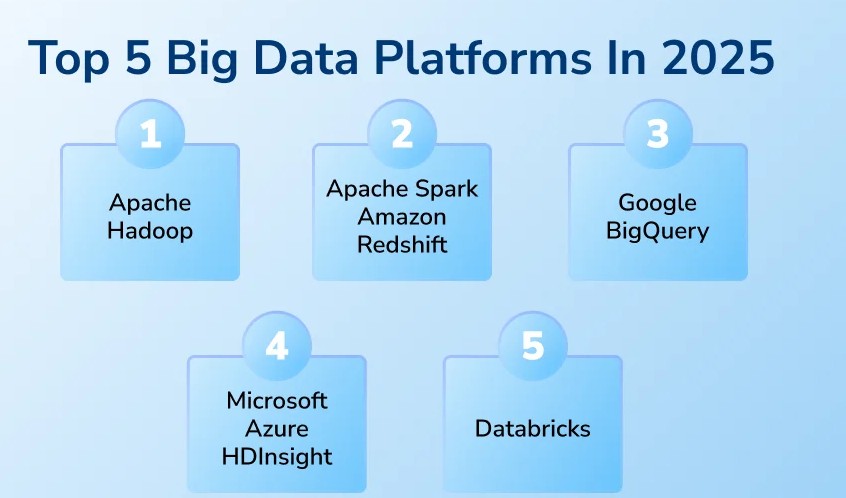
There are numerous big data platforms available in the market today, each with its own set of features, benefits, and pricing. To help you narrow down your options, we have highlighted some of the top big data platforms below:
| Platform Name | Key Features | Benefits | Pricing |
|---|---|---|---|
| Apache Hadoop | Scalability, Flexibility, and Open-source | Low cost, High reliability, and Ability to handle large datasets | Free |
| Amazon Web Services (AWS) Elastic MapReduce (EMR) | Real-time data processing, Analytics, and Easy integration with other AWS services | Low cost, Easy to use, and High scalability | Pay-as-you-go |
| Google BigQuery | Real-time data processing, Advanced analytics, and Cloud-based | Fast query speeds, Easy to use, and No need for infrastructure management | Pay-as-you-go |
| Microsoft Azure HDInsight | Scalability, Integrated with Microsoft ecosystem, and Real-time data processing | Low cost, Advanced analytics, and Easy to deploy | Pay-as-you-go |
Choosing the right big data platform for your business depends on your specific needs and requirements. It’s essential to consider factors such as the size of your datasets, processing speed, and analytics capabilities when making a decision.
Tip: If you’re unsure which platform to choose, try exploring the free trial options or consulting with a big data expert.
How to Choose the Right Big Data Platform for Your Business
Choosing the right big data platform for your business can be a daunting task, as there are several options available in the market. Here are some key factors to consider before making a decision:
- Data volume: Determine how much data your business generates and stores, and choose a platform that can handle that amount.
- Processing speed: Consider the speed at which you need to process your data, and choose a platform that can handle real-time or batch processing, depending on your requirements.
- Analytics capability: Evaluate the analytics capabilities of the platform, such as data visualization, predictive modeling, and machine learning, to ensure that it meets your business needs.
- Deployment options: Decide whether you want to deploy the platform on-premise, in the cloud, or in a hybrid environment, and choose a platform that supports your preferred deployment model.
Additionally, it’s important to consider the cost of the platform, including licensing fees, support costs, and any additional hardware or software requirements. It’s also a good idea to read reviews and case studies from other businesses to get a sense of how the platform has performed for them.
Big Data Platform Implementation and Best Practices
Implementing a big data platform can be a complex process, and it’s essential to follow best practices to ensure a successful deployment. Here are some tips to help you get started:
1. Plan your deployment
Before you begin the implementation process, it’s crucial to develop a clear plan. Define your objectives, identify key stakeholders, and establish a timeline for your project. You should also ensure that you have the necessary resources and budget to execute your plan effectively.
2. Choose the right deployment model
Big data platforms can be deployed on-premise, in the cloud, or in a hybrid environment, depending on your specific requirements. Consider factors such as data privacy, access, and security, as well as your organization’s scalability needs when choosing your deployment model.
3. Ensure data migration and integration
When moving to a big data platform, you will likely need to migrate existing data and integrate with other IT systems. Effective integration requires careful planning and testing to ensure seamless data transfer and avoid downtime.
4. Test and Verify
Thorough testing is essential to ensure that your big data platform is running correctly. You should test the platform at each stage of the deployment process, identify and resolve any issues before moving to production. Verification can help ensure that the platform performs as expected and meets your organization’s business needs.
5. Provide Training
Training is essential to ensure that all stakeholders understand how to use the new platform. This training should cover critical features of the platform and demonstrate how to use the platform to achieve specific business objectives.
6. Ongoing Support and Maintenance
Even after deployment, it’s essential to have a support plan in place. This plan should include regular maintenance activities, such as optimizing the platform’s performance, updating the system as required, and providing ongoing user support.
Big Data Management and Security
As businesses continue to rely on big data platforms to make critical decisions, it is important to ensure that the data is properly managed and secured. Failure to do so can result in severe consequences, including data breaches, compliance issues, and reputational damage.
Big Data Management
Effective big data management involves processes and tools that enable the collection, storage, processing, and analysis of vast amounts of data. This includes data cleansing, integration, and transformation, as well as metadata management and data quality assurance.
One way to ensure proper data management is to implement a data governance framework, which establishes policies, standards, and procedures for managing data assets. This framework should include roles and responsibilities for data ownership, stewardship, and security.
| Data Management Best Practices |
|---|
| Establish clear data ownership and stewardship roles |
| Develop a data governance framework |
| Ensure data quality through regular monitoring and testing |
| Implement appropriate tools for data cleansing, integration, and transformation |
Big Data Security
Big data platforms also present unique security challenges, as they involve storing and processing sensitive information on a large scale. To ensure data security, it is important to implement robust access control mechanisms, encryption, and monitoring.
Data masking is another technique that can be used to protect sensitive information by creating a substitute value for the original data. This enables data analysts to still work with the data without exposing the actual information.
| Big Data Security Best Practices |
|---|
| Implement access control mechanisms and encryption |
| Regularly monitor for security breaches and unusual activity |
| Use data masking to protect sensitive information |
| Train employees on data security best practices |
By implementing effective big data management and security practices, businesses can minimize risks and ensure that their data is accessible, accurate, and secure.
Popular Use Cases of Big Data Platforms
Big data platforms are being widely used across various industries to gain insights, improve decision-making, and drive business outcomes. Here are some popular use cases of big data platforms:
Healthcare
Big data platforms are transforming the healthcare industry by enabling better patient care and outcomes. By analyzing large volumes of medical data, healthcare providers can identify patterns and trends, predict potential health risks, and personalize treatment plans for patients. For instance, big data platforms are being used for:
| Use Case | Description |
|---|---|
| Cancer Research | Big data platforms are being used to analyze genetic data and identify biomarkers for cancer diagnosis and treatment. |
| Drug Development | Big data platforms are being used to analyze clinical trial data and accelerate the discovery and development of new drugs. |
| Electronic Health Records (EHRs) | Big data platforms are being used to store, manage, and analyze EHRs for better healthcare decision-making and patient outcomes. |
Finance
Big data platforms are revolutionizing the finance industry by providing real-time insights, improving risk management, and enhancing customer experience. By analyzing large volumes of financial data, financial institutions can identify fraudulent transactions, assess credit risk, and personalize financial services for customers. For instance, big data platforms are being used for:
| Use Case | Description |
|---|---|
| Algorithmic Trading | Big data platforms are being used to analyze market data and execute trades in real-time, improving trading performance and profitability. |
| Fraud Detection | Big data platforms are being used to identify fraudulent transactions and prevent financial losses for banks and customers. |
| Customer Analytics | Big data platforms are being used to analyze customer data and provide personalized financial services, improving customer experience and loyalty. |
Retail
Big data platforms are transforming the retail industry by providing insights into customer behavior, optimizing supply chain management, and enhancing marketing strategies. By analyzing large volumes of transactional data, retailers can identify purchasing patterns, predict demand, and personalize customer offers. For instance, big data platforms are being used for:
| Use Case | Description |
|---|---|
| Predictive Analytics | Big data platforms are being used to analyze customer data and predict future buying behavior, helping retailers optimize inventory and improve sales. |
| Supply Chain Optimization | Big data platforms are being used to track inventory levels and transportation data, optimizing supply chain management and reducing costs. |
| Marketing Strategy | Big data platforms are being used to analyze customer data and provide personalized marketing offers, improving customer engagement and loyalty. |
“Big data platforms are enabling businesses to make data-driven decisions, drive innovation, and stay competitive in today’s digital landscape.”
Frequently Asked Questions about Big Data Platforms
If you’re new to big data platforms, you might have some questions about how they work and how they can benefit your business. Here are some frequently asked questions that can help you gain a better understanding of these platforms.
What is the typical cost of a big data platform?
The cost of a big data platform can vary widely depending on the specific features and capabilities you require. Some platforms have a pay-as-you-go pricing model, while others may require a more substantial upfront investment. It is best to do your research and compare pricing plans to find the option that best suits your business needs and budget.
How long does it take to implement a big data platform?
The amount of time required to implement a big data platform can vary based on the size and complexity of your organization, as well as the specific platform you choose. Some platforms can be deployed in a matter of weeks, while others may take several months. It is important to work closely with your chosen platform provider to ensure a smooth and timely implementation process.
How do I ensure my business data is secure on a big data platform?
Big data platforms offer a range of features to help keep your data safe and secure, such as role-based access control, data encryption, and activity monitoring. It is also important to follow best practices for data management, such as regularly backing up your data, monitoring for security threats, and training your staff on how to handle sensitive information.
Can a big data platform help my business improve customer experience?
Yes, big data platforms can help you gain valuable insights into customer behavior, preferences, and needs, allowing you to tailor your products and services to better meet their expectations. These platforms can also help you identify areas for improvement in your customer experience, such as reducing wait times, improving website navigation, or offering personalized recommendations.